An official website of the United States government.



Selected USDA Research on Exotic Chicken Breeds
While exhibitions of fancy poultry were once common, the practice has become a niche hobby. There are a few recent publications on USDA poultry research within this topical area, focused mainly on the specific characteristics of exotic breeds of chickens.
All of these featured articles are products of the USDA's Agricultural Research Service and are available from the National Agricultural Library Digital Collections. The Poultry '04 report was issued by the USDA's Animal and Plant Health Inspection Service.
(To read the abstracts of any of these articles or to download the full text, click the image)
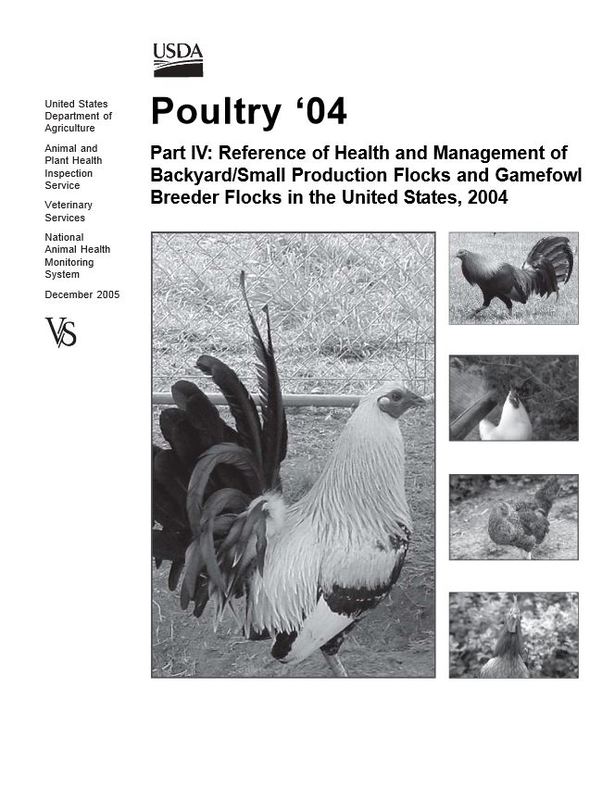
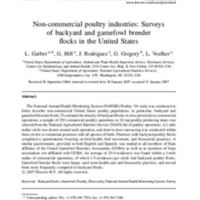
Poultry 2004 Part IV: Reference of Health and Management of Backyard / Small Production Flocks and Gamefowl Breeder Flocks in the United States
U.S. Department of Agriculture. Animal and Plant Health Inspection Service. Veterinary Services. National Animal Health Monitoring System (NAHMS)
"The National Animal Health Monitoring System (NAHMS) is a nonregulatory division of the United States Department of Agriculture (USDA) designed to help meet the Nation’s animal-health information needs. Layers ’99 was NAHMS’ first national study on poultry baseline health and management. Layers ’99 estimated the prevalence and associated risk factors of Salmonella enterica enteritidis in U.S. layer flocks. Poultry ’04 is NAHMS’ second study of the U.S. poultry industry. For Poultry ’04, NAHMS conducted a thorough assessment to determine the information needs of the poultry industry, researchers, and Federal and State governments. This assessment indicated a need for information regarding bird health, bird movement, and biosecurity practices of nontraditional poultry industries, such as backyard flocks, gamefowl, and live-poultry markets. Part IV: Reference of Health and Management of Backyard/Small Production Flocks and Gamefowl Breeder Flocks in the United States, 2004 compares information collected from backyard flock producers and gamefowl breeders reported in respective parts I and II of the Poultry ’04 study."