Skip to Main Content

An official website of the United States government.

The .gov means it’s official.
Federal government websites always use a .gov or .mil domain. Before sharing sensitive information online, make sure you’re on a .gov or .mil site by inspecting your browser’s address (or “location”) bar.

This site is also protected by an SSL (Secure Sockets Layer) certificate that’s been signed by the U.S. government. The https:// means all transmitted data is encrypted — in other words, any information or browsing history that you provide is transmitted securely.

  • Ask A Question
  • Contact Us
  • DigiTop
National Agricultural Library
U.S. Department of Agriculture
Advanced Search
  • Exhibits Home
  • Browse Exhibits
    • An Illustrated Expedition of North America
    • Frank N. Meyer
    • Popcorn: Ingrained in America's Agricultural History
    • Smokey Bear
    • The American Dairy Industry
    • USDA's Contributions to Parasitology
    • Image Galleries >
      • Manuscript Collections
      • Nursery and Seed Trade Catalogs
      • Poster Collection
      • Rare Books
    • Special Exhibits >
      • Agent Orange
      • Collections Calendar
      • STOP Screwworms
      • USDA History Collection
      • Events at the Library
    • Past Exhibits
  • Browse Collections
  • Browse Items
  • Disclaimer
  • External Resources

October

  • Year 2015 Calendar Exhibits
  • January
  • February
  • March
  • April
  • May
  • June
  • July
  • August
  • September
  • October
  • November
  • December

Pumpkins!

What would Halloween be without carved pumpkins?  In 1893, H.W. Buckbee seed company's "King of the Mammoths" variety was on exhibit at the 1893 World's Fair. This enormous pumpkin weighed 469 pounds. Learn about the changing pumpkin varieties over the years as documented in seed catalogs and rare books.
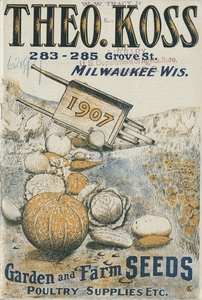
Thumbnail for the first (or only) page of Theo. Koss Garden and Farm Seeds.
Theo. Koss Garden and Farm Seeds
(1907)
Thumbnail for the first (or only) page of H.W. Buckbee's Seed and Plant Guide.
H.W. Buckbee's Seed and Plant Guide
(1896)
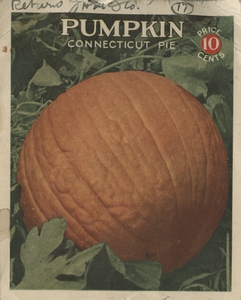
Thumbnail for the first (or only) page of Mock-up of pumpkin seed packet.
Mock-up of pumpkin seed packet
(undated)
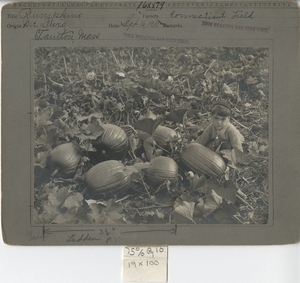
Thumbnail for the first (or only) page of Pumpkins in Connecticut field.
Pumpkins in Connecticut field
(1908)
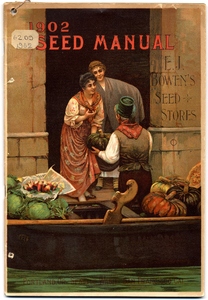
Thumbnail for the first (or only) page of E.J. Bowen's Seed Stores Seed Manual, Portland, Oregon.
E.J. Bowen's Seed Stores Seed Manual, Portland, Oregon
(1902)
Thumbnail for the first (or only) page of Griffith & Turner Co.'s Catalogue of Farm and Garden Supplies, Baltimore, Maryland.
Griffith & Turner Co.'s Catalogue of Farm and Garden Supplies, Baltimore, Maryland
(1902)
Thumbnail for the first (or only) page of Currie Bros. Co. Farm and Garden Annual.
Currie Bros. Co. Farm and Garden Annual
(1904)
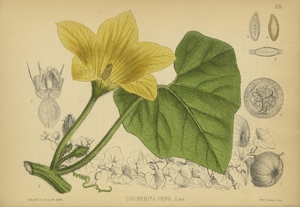
Thumbnail for the first (or only) page of Medicinal Plants.
Medicinal Plants
(1880)

Applejack Month

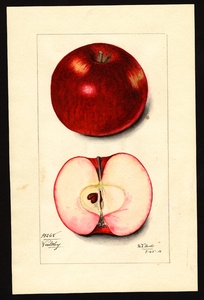
October is Applejack month.  Applejack is an alcoholic beverage made from concentrated apple cider. It was popular in colonial America, and is growing in popularity again. Here are four apple varieties that are recommended for cider-making. The Winesap apple is an especially popular variety for applejack.  The images are from the USDA Pomological Watercolor Collection. They are all heritage American apples, and we chose works by women artists.

A recipe for a non-alcoholic concentrated apple cider beverage can be found in Dishes and Beverages of the Old South (1913), a copy of which is held in the Jean Meyer Cookbook Collection, NAL, Special Collections:

Boiled cider: Reduce new sweet cider one-half by gentle boiling, skimming it clean as it boils, then bottle, putting a clove or two, a grain of allspice and a blade of mace in each bottle. Cork, seal and keep in a cool place. This is especially valuable for use in mincemeat, or for flavoring sauces for nursery puddings. A variant is to add sugar towards the last, enough to make a thinnish syrup, which is itself a good sauce for simple desserts.
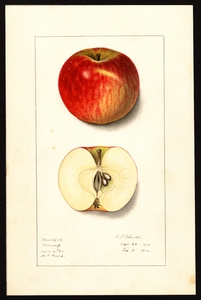
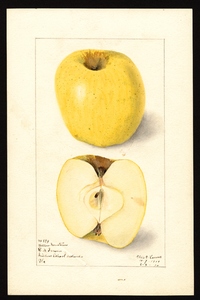
Thumbnail for the first (or only) page of Winesap.
Winesap
(1911-02-07)
Thumbnail for the first (or only) page of Yellow Newtown (Pippin).
Yellow Newtown (Pippin)
(1910-02-04)
Thumbnail for the first (or only) page of Golden Delicious.
Golden Delicious
(1920-12-03)
Thumbnail for the first (or only) page of Wealthy.
Wealthy
(1916)

Old Farmers Day

(October 12)

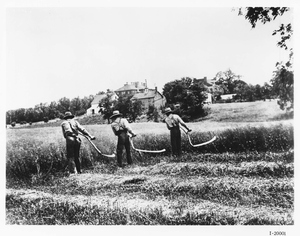
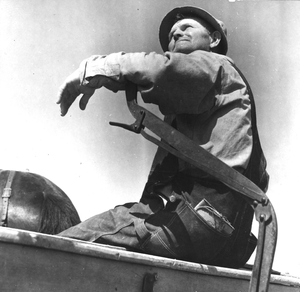
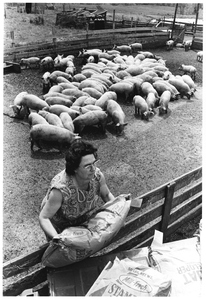
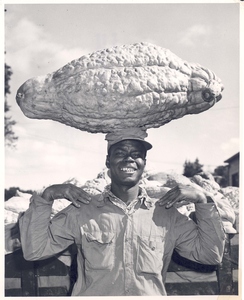
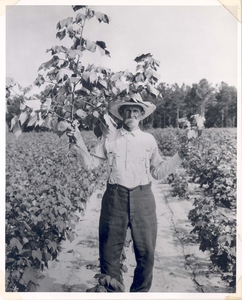
We salute our hard-working farmers on Old Farmers Day, October 12! It’s a time to celebrate the year's harvest and honor the farmers who produce the food and raw materials we all depend on. While all farmers can't be called "old", the Old Farmers Day observance itself has its roots in the harvest festivals of many years ago. NAL's Special Collections hold many ways to discover the faces and activities of farmers from the past in our rare books and document collections.

Thumbnail for the first (or only) page of Cutting seed potatoes.
Cutting seed potatoes
(1943)
Thumbnail for the first (or only) page of Setting tobacco plants, Carolina..
Setting tobacco plants, Carolina.
(undated)
Thumbnail for the first (or only) page of Harvesting grain by hand.
Harvesting grain by hand
(undated)
Thumbnail for the first (or only) page of Missouri farmer, Boone County.
Missouri farmer, Boone County
(1940)
Thumbnail for the first (or only) page of Feeding pigs.
Feeding pigs
(1975)
Thumbnail for the first (or only) page of Vegetable farmer.
Vegetable farmer
(1949)
Thumbnail for the first (or only) page of Peanut farmer, Boykins, Virginia.
Peanut farmer, Boykins, Virginia
(circa 1940)
Thumbnail for the first (or only) page of Cotton farmer.
Cotton farmer
(1928)

October 2015 calendar page (24mb PDF) 8.5 x 11 and 11 x 17.

← September
November →
October

Government Links

  • Policies and Links
  • Plain Writing
  • FOIA
  • Accessibility Statement
  • Privacy Policy
  • Non-Discrimination Statement
  • Civil Rights Policy
  • Information Quality
  • National Agricultural Library
  • Agricultural Research Service
  • USDA.gov
  • USA.gov
  • WhiteHouse.gov

Sign up for ARS News updates